FOREIGN BATTERY IN THE ESOPHAGUS
I Made Nudi Arthana
Foreign bodies (BA) in the esophagus are one of the problems often encountered in children, due to increased curiosity and hand-to-mouth activity. 1 Foreign bodies in the esophagus that are often encountered include coins, fish bones, safety pins, batteries, magnets, objects House ladder, And others. 1 Number incident swallowed rock battery, represent less than 2% Object foreign Which swallowed by children, but in two decade final, the frequency continues to increase. 2
LITERATUR REVIEW
Anatomy of the Esophagus
Esophagus is a channel between the pharynx and the stomach measuring about 23-25 cm long starting from openness pharynx on level Vertebra Cervical (VS) to six, pass diaphragm on level Thoracic Vertebrae (VT) to ten, And open to stomach. The esophagus is divided into three segments based on its location, cervical, thoracic, and abdominal. The cervical portion extends from the cricopharyngeus to the suprasternal prominence, the thoracic portion extends from the suprasternal prominence to the diaphragm, and the abdominal portion continues to the cardia of the stomach. At rest its diameter is approximately 2 cm, and when distended with a bolus of food it can extend up to 3 cm laterally. 6
Esophagus in children as high as VS IV-V until VT IX. Long varies between 8-10 cm. The growth of the length of the esophagus at the age of 1 year is 12 cm, at the age of 5 years it is 16 cm long and after that the growth slows down, at the age of 15 years it only reaches 19 cm. The length of the esophagus is measured from tooth series over the baby 18 cm long, child (1 year) 18 cm long, child 3 years throughout 22 cm, 6 year throughout 25 cm, 10 year throughout 27 cm, 14 year throughout 34 cm, mature throughout 40 cm. 7
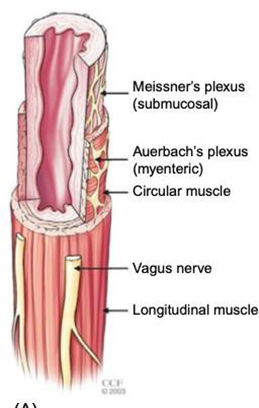
Picture 1. Anatomy esophageal neuromuscular
There are three areas of narrowing in the esophagus that can be visualized on fluoroscopy and endoscopy. The cricopharyngeus is the first and narrowest part of the esophagus, located at about the sixth cervical vertebra. The second narrowing is approximately 25 cm from the incisors where the arch aorta And bronchus stem main left across esophagus. Area constriction third is in the lower esophageal sphincter. These three natural esophageal narrowings are the most common sites of foreign body impaction. 6
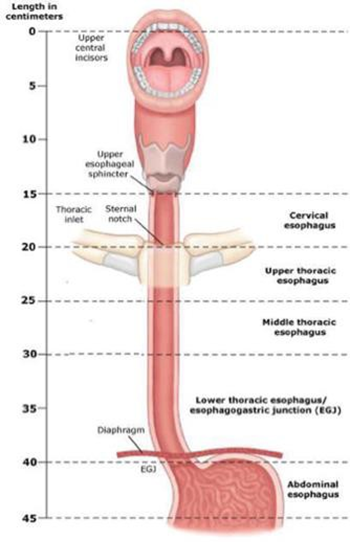
Figure 2. Part from Esophagus. 6
The esophagus consists of four layers: mucosa, submucosa, muscularis propria, and adventitia. Muscularis property shared Again become layer longitudinal outside Which thin And the thicker inner circular layer. The proximal third of the esophagus consists of striated muscle while the distal third consists of smooth muscle, with a gradual transition zone in between. 6
The motor innervation of the esophagus is by somatic motor neurons in the striated muscle, running in the vagus. Muscle plain esophagus innervated by neuron vagal preganglionic Which appear from dorsal motor nucleus of the vagus, and synapses on postganglionic neurons in the myenteric plexus.
Vascularization the esophagus is supplied through branch from a. thyroid inferior in one third proximal, aorta thorax in one third middle, And artery stomach left in one third distal. Drainage vein in a way proximally through the branches of the azygos vein and hemiazygos and finally to vein superior cava in chest cavity. The distal esophagus drains into the left gastric vein. 6
Epidemiology
The incidence of foreign bodies in the esophagus is 16 per 100,000 people/year. The majority of cases (75%) occur before age 4 year. Every year estimated 1,500 death happen Because object foreign to esophagus. Although part big object foreign Which swallowed will across esophagus smoothly , but 10-20% require intervention. 3.9 Object foreign rock battery represents 2% of all foreign objects swallowed by children, but in the last two decades the frequency has been increasing. Incidence consumption rock battery around 10 case per million person every years. As many as 15% of foreign bodies are stuck in the middle of the esophagus at the aortic arch and the carina overlaps the esophagus, this is confirmed on chest X-ray examination. The remaining 15% are stuck in the lower esophageal sphincter at the gastroesophageal junction. 3
Pathophysiology of Damage Consequence Object Foreign Battery Stone
The battery stone has a negative terminal and a positive terminal. The negative terminal is made of zinc. And lithium And terminal positive made from lithium, eat, eat dioxide, oxygen, silver oxide, or oxide mercury. Mucosa bridge end positive And negative, so that complete the circuit that allows electric current to flow and results in the generation of hydroxide radicals. Lithium batteries provide higher voltage and have a longer power than battery others. By Because That, they are more general used on Lots tool household. Battery stone own diameter 6-25 mm. Battery stone which is bigger than 12mm more likely to get stuck in a small child's esophagus. 2.3
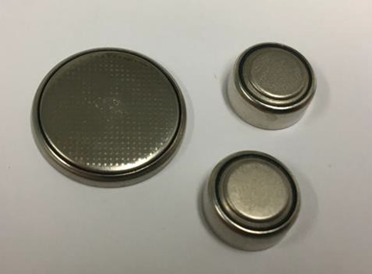
The mechanism of battery stone foreign bodies includes: 1) Generation of external electrolyte current that hydrolyzes tissue fluid and produces hydroxide at the negative pole of the battery, 2) Leakage of battery contents, especially alkaline electrolyte, and 3) Physical pressure on adjacent tissues. 3 The mucosa becomes edematous and battery stones can fuse with the mucosa causing ulceration and perforation. Empty batteries also have the potential to cause tissue damage, because the battery has sufficient voltage to produce external electric current. 2
An experimental study in dogs after being given a battery, the upper esophagus was surgically removed, and then examined for tissue pathology. Tissue damage began within 2 hours and ulceration was seen within 4 hours, but there was no evidence of battery lysis until in esophagus during more from 48 O'clock (One battery will experience leakage after 72 hours). 3
Diagnosis
Anamnesis
In communicative adults, a history of foreign body ingestion may provide details. Which more accurate about time And type object foreign. But different with children, usually playing without being accompanied by adults. Symptoms of partial or complete esophageal obstruction total depends on location object foreign. Lots patient without symptom, but Possible there are symptoms of cough, vomiting, drooling , fever, chest pain, diarrhea, epigastric pain, or abdominal pain after swallowing the battery. If esophageal perforation or tracheoesophageal fistula occurs, the symptoms are shortness of breath, vomiting after eating/drinking, drooling , hematemesis, and respiratory distress. 2
Physical examination
Physical examination in both children and adults is not very helpful in the diagnosis, but is important in identifying complications. In esophageal foreign bodies, flavor pain/feeling No comfortable substernal with onset I And difficulty swallowing. If it happens in proximal esophagus And compression trachea, found symptom wheezing, stridor And crepitus on the neck. On inspection swallowing, happen regurgitation a number of moment after tried test Eat or drink.
Common signs and symptoms include: 1) Chest or throat: pain or discomfort in the chest or throat area may occur, 2) Difficulty swallowing (Dysphagia): difficulty or pain when swallowing food or liquids, 3) Chest Pressure : a feeling of pressure or heaviness in the chest, 4) Vomiting: vomiting may occur as the body's reaction to a foreign object. Which swallowed, 5) Sick stomach: flavor Sick or discomfort in stomach, 5) Saliva excessive: increased saliva production.
Other symptoms that may appear: 1) Persistent cough: especially if the foreign object irritates the throat or airways, 2) Loss of appetite: due to pain or discomfort when eating, 3) Fever: if there is a secondary infection or inflammation, 4) Difficulty breathing: If the foreign object causes airway obstruction.
Supporting investigation
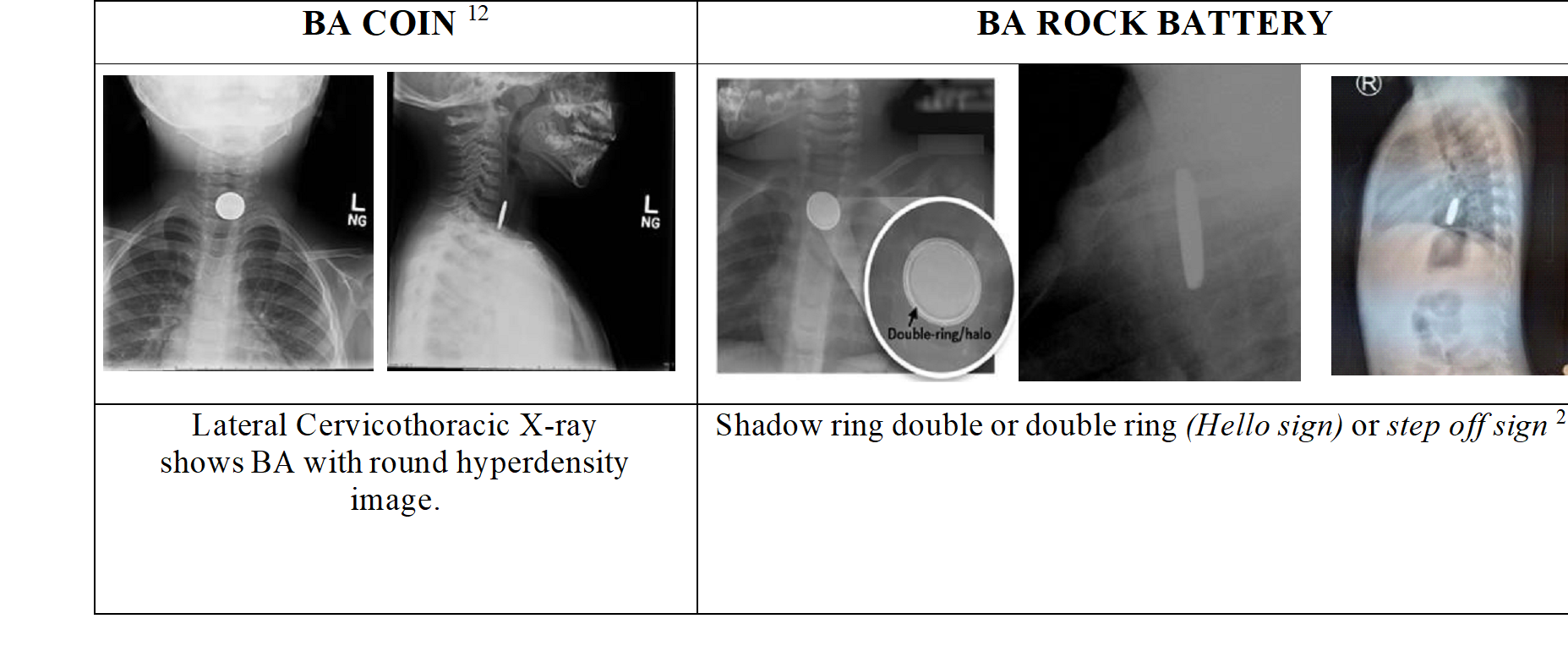
Approach diagnostic For investigate object foreign Which swallowed use chest x-ray and plain abdomen AP and lateral to localize And identify object. foreign object metal nature radiopaque And usually can recognized. Like coins, stones battery Which located in the esophagus will also appear as a firm opacity on an AP X-ray section. On the AP X-ray section lateral looks intersection anode-cathode or shadow ring double or double ring (hello) sign) or step-off the gn Which differentiate object foreign rock battery with coin. 6 Endoscopy provides the most accurate diagnostic method in cases of suspected foreign bodies. 6
Table 1. BA Differences coin with stone battery
Differential Diagnosis
Differential diagnosis of foreign bodies in the digestive tract is: 1) Esophagitis, 2) Globus sensation, 3) Esophageal rupture.
Table 2. Diagnosis Appeal Object Foreign
| ESOPHAGITIS 14 | SENSATION GLOBUS 15 | ESOPHAGEAL RUPTURE 16 |
Incidence | 1% from population | 4% from the patient ENT | 1:6000 Onset: sudden |
Etiology | GERD, radiation, infection, medication, etc. | No known GERD, LPR, stress, tumor | Trauma, iatrogenic, objects foreign, Esophageal stenosis, barrett's esophagus |
Pathophysiology | Etiology è wound on the mucosa |
|
|
Symptom | Painful back,heartburn, odynophagia, dysphagia | Stuck in the throat, frequent throat clearing, difficulty swallowing | Nauseous, vomit, moderate to severe chest and back pain, choking sensation, congested breath |
Supporting investigation | Depends on the etiology of esophagitis eosinophilic, CMV esophagitis, HSV esophagitis. Histology of eosinophilic esophagitis, esophagitis CMV. | Flexible langingoscopy , esophagogram (eliminate other causes) | BGA, blood count, CRP, X-rayAP/Lateral thorax , esophagoscopy, Non -contrast CT |
Governance | Depends etiology | Antidepressants, cognitive behavioral therapy | Operative |
Management of Objects Foreign Battery stone in Esophagus
Action extraction object foreign is treatment choice main. 9
Pre-extraction of foreign bodies: 1) At home and during transport: 10 mL (two teaspoons) of honey every 10 minute until arrive in hospital. Avoid giving honey to children aged <1 year,
2) In House Sick or place maintenance clinical: 10 mL (two spoon tea) sucralfate (Carafate) every 10 minutes until the battery stone extraction action can be performed. This can be started even before confirmation X- Ray For consumption Which witnessed or suspected, 3) Until six dose in arrangement pre-house Sick And three dose addition in arrangement clinical recommended by guidelines National Capital Poison Center (NCPC); provider service must use consideration clinical For give dose addition If will happen further delay carry on (for example, transportation Which prolonged to facility Which different), 4) Warning: This is a mitigation strategy and is not a substitute for immediate esophageal battery stone extraction. BA extraction: 1) Esophageal battery stones are an acute surgical emergency, proceed to the operating room. Anesthesia: Induction fast, 2) Approach with visualization direct more liked with esophagoscopy Which flexible or rigid, 3) Consider laryngoscopy And bronchoscopy straight to evaluate injury road breath laryngotrachea (fistula trachea-esophagus Which Already There is or developing), especially in cases where the negative pole faces anteriorly (anterior step-off BB), 4) Consider the potential for general acute complications such as perforation esophagus, tracheoesophageal fistula, band paresis voice or paralysis, proximity to major vascular structures (arterial fistula), 5) If no esophageal perforation is seen, perform endoscopic irrigation of the injury site, 6) tissue with 50-150 mL of sterile 0.25% acetic acid while suctioning excess irrigation, 7) If perforation or severe circumferential injury is suspected, consider placing a nasogastric tube while in the operating room. Post BA extraction: 1) Remember that tissue injury may develop after BB removal, 2) Consider an esophagogram to rule out perforation before starting oral intake, 3) Consider chest contrast imaging (MRI, CT Angiography) if there is severe injury and to assess proximity to major vascular structures (eg, aorta, etc.) 4) Monitor potential complications Which pending: perforation esophagus, fistula tracheoesophageal, aortoesophageal fistula, vocal cord paresis or paralysis, mediastinitis, spondylodiscitis or esophageal stricture. These BB complications can sometimes appear a few days to weeks later, 5) Consider the need for serial photos, endoscopy, or stool guaiac test. The algorithm for managing foreign bodies such as battery stones in the esophagus can be seen in Figure 4.

Complications
It is important to predict, promptly detect, and treat potential serious complications that Possible related with consumption rock battery. Complications Which reported covering esophageal stenosis or perforation, mediastinitis, tracheoesophageal fistula, vocal cord paresis and paralysis, spondylodiscitis, intestinal perforation with peritonitis, cardiac and respiratory failure, pneumothorax, pneumoperitoneum, anterior spinal artery syndrome with bilateral lower limb paralysis, fistula vessels blood Which leading to bleeding, And death. Children with pre-existing gastrointestinal abnormalities (eg, tracheoesophageal fistula, stenotic lesions, previous gastrointestinal surgery) are at higher risk. 3 According to the National Capital Poison Center (NCPC), nonfatal cases of battery ingestion with severe esophageal or respiratory tract injury have been reported. Complications often occur spontaneously. late with incident bleeding Which reported for weeks after battery stone extraction. Other complications such as esophageal stricture and perforation, spondylodiscitis, and tracheoesophageal fistula have been reported. Complications that can occur after the battery stone foreign body can be removed are tracheoesophageal fistula, esophageal perforation, esophageal stenosis, vocal fold paresis, pneumothorax, aspiration pneumonia, spondyloarthritis, esophageal-aortic fistula, and respiratory failure appearing several weeks to several months later with some cases most slow 6 until 8 month after swallowed rock battery. Complications term intermediate in the form of bleeding, and long-term complications in the form of stricture formation, even death. With thus, maintenance advanced For patient rock battery can evacuated considered It is important to assess the possibility of complications. 2,9,11 These complications are common in esophageal strictures and are associated with higher morbidity in intentional compared with unintentional ingestion. 2
Prognosis
Object foreign rock battery in esophagus is condition Serious with risk tall complications that threaten life. Diagnosis early And appointment with action extraction quick can prevent complications. History of ingestion is not always reported, therefore clinicians should raise suspicion of battery stones in patients with respiratory or gastrointestinal symptoms. Which persistent, And X-ray thorax must obtained If symptom still There is even though there is therapy medical. Prevention object foreign rock battery in esophagus Of course just is best management, parents and caregivers should be aware of the dangers of battery swallowing and the importance of immediate treatment. Batteries should be kept out of the reach of children and out of the storage compartment. battery on product House ladder must designed with more safe. Immediate management of foreign body ingestion cases is the best treatment extraction to reduce the risk of morbidity and mortality. Fast and appropriate management is directly proportional to prognosis. 4
CONCLUSION
A battery stuck in the esophagus is an emergency and must be treated immediately. issued For prevent damage For prevent damage organ more carry on or even perforation. Some damage mechanisms that can be caused by swallowed batteries are leakage from the battery contents, and necrosis due to direct pressure from the battery. Management procedures object foreign can done with medical procedures and governance Operative according to the type of foreign object swallowed. The location of the foreign object obstruction greatly influences the selection of the foreign object management procedure to be used, especially in the procedure operative. Management standard Which proven effective For object foreign esophagus is endoscopy, namely rigid esophagoscopy and flexible esophagoscopy. The selected management procedure and the length of time the foreign object is swallowed in the esophagus affect the complications that can occur.
REFERENCE
Khorana J, Tantivit Y, Phiuphong C, Pattapong S, Siripan S. Foreign body ingestion in pediatrics: Distribution, management and complications. Medicina [Internet]. 2019;55(10):686. Available from: https:// www.rch.org.au/clinicalguide/guideline_index/Foreign_-
Conners G, Mohseni M. Pediatric foreign body ingestion article. StatPearls Publishing LLC. 2021;
Su A, Parker CH, Conklin JL. Esophageal anatomy and physiology. In: Clinical and Basic Neurogastroenterology and Motility. Elsevier; 2019. p. 79–88.
Fung BM, Sweetser S, Song LMWK, Tabibian JH. Foreign object ingestion and esophageal food impaction: An update and review on endoscopic management. World Journal of Gastrointestinal Endoscopy. 2019 Mar 16;11(3):174–92.
Dorterler ME. Clinical Profile and Outcome of Esophageal Button Battery Ingestion in Children: An 8-Year Retrospective Case Series. Emergency Medicine International. 2019 Dec 1;2019:1–7.
Gwalani R. Ingested coin in esophagus: Radiology case. Radiopaedia [Internet]. 2021 [cited 2021 Oct 1]; Available from: https://radiopaedia.org/cases/89992
Antunes C, Sharma A. Esophagitis. StatPearls Publishing LLC [Internet]. 2021;8(5). Available from: https://commons.wikimedia.org/wiki/File:Multi_ring_esophagus.jpg
Poison Control Center. Battery Ingestion Hotline. 2020. https:// www.batteryingestionhotline.com/. Accessed October 19, 2020.
Rishabh Shetia et a. Laryngoscope Investigative Otolaryngology. 2021;6:549–563.
National Capital Poison Center. Button Battery Ingestion Statistics. 2020 https:// www.poison.org/battery/stats. Accessed October 20, 2020.

Comments